

What Are the Best Refinance Options for Real Estate Investors
Top Refinance Solutions for Investors

Real estate investors often seek effective refinancing options to optimize their investment portfolios. Understanding the best refinance options available can significantly impact cash flow, investment opportunities, and overall financial health. This article explores various refinancing solutions tailored for real estate investors, including cash-out refinancing and hard money loans. By addressing common challenges faced by investors, we aim to provide insights into how these options can enhance liquidity and support growth. We will cover the top refinance loan options, the impact of investment property refinance rates, eligibility criteria, and the application process.
What Are the Top Refinance Loan Options for Real Estate Investors?
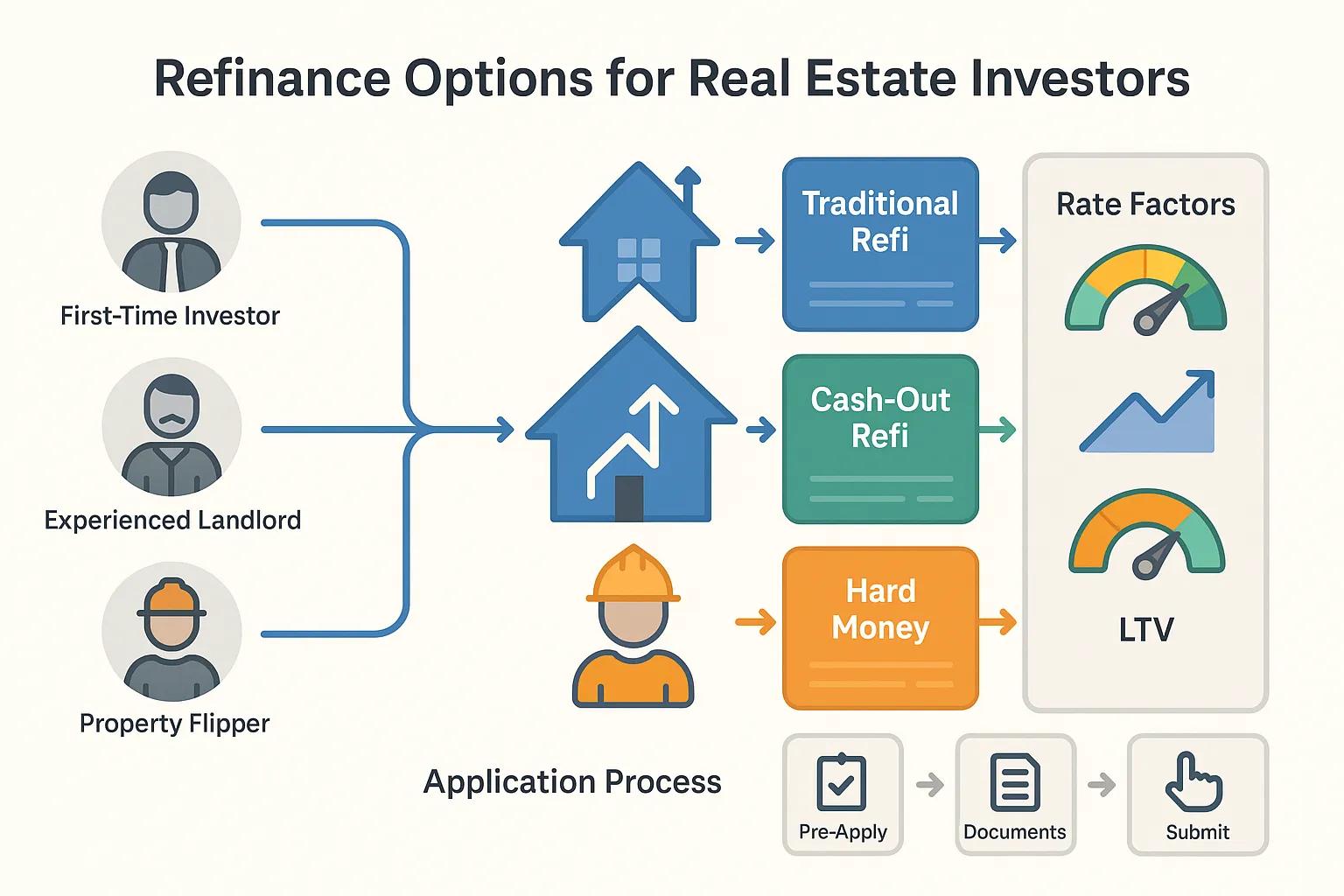
Real estate investors have several refinancing options to consider, each with unique benefits and eligibility requirements. The most common types include traditional refinancing, cash-out refinancing, and hard money loans. These options allow investors to leverage their existing equity, access funds for new investments, or consolidate debt.
For instance, cash-out refinancing enables investors to withdraw equity from their properties, providing liquidity for further investments or renovations. Hard money loans, on the other hand, offer quick access to funds with less stringent credit requirements, making them suitable for urgent financing needs. Understanding these options is crucial for making informed decisions that align with investment goals.
How Does Cash Out Refinance Benefit Real Estate Investors?
Cash-out refinancing allows real estate investors to tap into the equity of their properties, providing several financial advantages. This option increases liquidity, enabling investors to access cash for new investment opportunities or to cover unexpected expenses.
Increased Liquidity: By converting equity into cash, investors can reinvest in additional properties or fund renovations that enhance property value.
Investment Opportunities: The cash obtained can be used to purchase new investment properties, allowing for portfolio expansion.
Debt Consolidation: Investors can use cash-out refinancing to pay off high-interest debts, potentially lowering overall interest costs and improving cash flow.
These benefits make cash-out refinancing a strategic choice for many real estate investors looking to optimize their financial positions.
Despite the clear advantages, some studies indicate that many eligible borrowers do not fully utilize cash-out refinancing opportunities.
Why Borrowers Miss Cash-Out Refinance Opportunities
mortgagerefinancing behavior, we find that over half of borrowers with high‐interestloans and available home equity do not take advantage of their cash‐out opportunities. Not cashing in on cashing out: An analysis of low cash‐out refinance rates, C Wardius, 2026
What Are Hard Money Refinance Loans and When Are They Suitable?
Hard money refinance loans are short-term financing options secured by real estate, typically offered by private lenders. These loans are suitable for investors who need quick access to capital or have less-than-perfect credit.
Quick Access to Funds: Hard money loans can be processed rapidly, often within days, making them ideal for time-sensitive opportunities.
Less Stringent Credit Requirements: Unlike traditional loans, hard money lenders focus more on the property's value than the borrower's creditworthiness, making it accessible for many investors.
Higher Interest Rates: While these loans provide quick funding, they often come with higher interest rates and fees, which investors should consider when evaluating their options.
Understanding when to use hard money loans can help investors navigate urgent financial needs effectively.
How Do Investment Property Refinance Rates Affect Loan Choices?
Investment property refinance rates play a crucial role in determining the best loan options for real estate investors. These rates fluctuate based on market conditions, credit scores, and loan types, influencing the overall cost of borrowing.
What Factors Influence Mortgage Refinance Rates for Investors?
Several factors can impact mortgagere finance rates for real estate investors:
Credit Score Impact: A higher credit score typically results in lower interest rates, making it essential for investors to maintain good credit.
Market Conditions: Economic indicators, such as inflation and the Federal Reserve's interest rate decisions, can affect overall mortgage rates.
Loan-to-Value Ratio: A lower loan-to-value ratio can lead to better rates, as it indicates less risk to lenders.
By understanding these factors, investors can make informed decisions about when to refinance and which options to pursue.
Understanding the optimal timing for refinancing is crucial, and various models have been developed to guide these complex decisions.
Refinancing Decision Models for Long-Term Loans
This paper examines refinancing situations of firms and individuals who use long term loans. The paper then develops four decision models for typical refinancing situations considering
When is a good time to refinance?, 1986
How to Compare Best Mortgage Refinance Loans for Investment Properties?
When comparing mortgage refinance loans, investors should consider several key aspects:
Interest Rates Comparison: Look for competitive rates that align with market trends and personal financial situations.
Fees and Closing Costs: Evaluate the total cost of refinancing, including any fees associated with the loan.
Loan Terms and Conditions: Understand the terms of the loan, including repayment periods and any penalties for early repayment.
By carefully comparing these elements, investors can select the most advantageous refinancing option for their investment properties.
What Are the Eligibility Criteria for Real Estate Investor Loan Options?
Eligibility criteria for real estate investor loans can vary significantly based on the type of loan and lender requirements. Understanding these criteria is essential for investors seeking to refinance their properties.
Which Investor Profiles Qualify for Different Refinance Programs?
Different investor profiles may qualify for various refinance programs:
First-Time Investors: May have limited options but can still access certain programs designed for new investors.
Experienced Landlords: Typically have more refinancing options available due to established credit and property equity.
Property Flippers: Often require short-term financing solutions, making hard money loans a suitable choice.
Recognizing these profiles helps investors identify the best refinancing options for their unique situations.
How Does Tenant Occupancy Impact Refinance Eligibility?
Tenant occupancy can significantly influence refinance eligibility. Lenders often assess the occupancy status of a property to determine risk levels:
Owner-Occupied vs. Rental Properties: Owner-occupied properties may qualify for better rates compared to rental properties due to perceived lower risk.
Impact on Loan Terms: Properties with stable tenant occupancy may secure more favorable loan terms, as they demonstrate consistent income potential.
Lender Considerations: Lenders may require additional documentation for rental properties, including lease agreements and rental income verification.
Understanding how occupancy affects eligibility can help investors prepare for the refinancing process.
How to Navigate the Refinance Application Process for Investment Properties?
Navigating the refinance application process can be complex, but understanding the steps involved can streamline the experience for real estate investors.
What Are the Step-by-Step Procedures to Apply for RefinanceLoans?
The application process typically involves several key steps:
Pre-Application Preparation: Gather necessary documents, including income statements, tax returns, and property information.
Filling Out Forms: Complete the lender's application forms accurately to avoid delays.
Submitting Documentation: Provide all required documentation promptly to facilitate the review process.
By following these steps, investors can enhance their chances of a smooth refinancing experience.
How Can Investors Streamline Loan Approvals and Documentation?
To expedite loan approvals, investors can take several proactive measures:
Organizing Documents: Keep all necessary paperwork organized and readily accessible to streamline the application process.
Clear Communication with Lenders: Maintain open lines of communication with lenders to address any questions or concerns promptly.
Understanding Lender Requirements: Familiarize yourself with specific lender requirements to ensure compliance and avoid unnecessary delays.
Implementing these strategies can significantly improve the refinancing process for real estate investors.
For more information on navigating the complexities of investment property refinancing, consider consulting with Investor Mortgage Solutions.
Frequently Asked Questions
What is the difference between cash-out refinancing and traditional refinancing?
Cash-out refinancing allows investors to withdraw equity from their property, converting it into cash for other investments or expenses. In contrast, traditional refinancing typically involves replacing an existing mortgage with a new one, often to secure a lower interest rate or better terms without extracting equity. While both options can lower monthly payments, cash-out refinancing provides immediate liquidity, which can be crucial for investors looking to expand their portfolios or manage cash flow effectively.
Are there any risks associated with cash-out refinancing?
Yes, cash-out refinancing carries certain risks. By withdrawing equity, investors increase their mortgage balance, which can lead to higher monthly payments and interest costs over time. Additionally, if property values decline, investors may find themselves owing more than their property is worth, a situation known as being "underwater." It's essential for investors to carefully assess their financial situation and market conditions before opting for cash-out refinancing to mitigate these risks.
How can real estate investors improve their credit scores before refinancing?
Improving credit scores before refinancing can lead to better loan terms and lower interest rates. Investors can enhance their scores by paying down existing debts, ensuring timely payments on all bills, and avoiding new credit inquiries. Additionally, reviewing credit reports for errors and disputing inaccuracies can help. Maintaining a low credit utilization ratio and keeping older credit accounts open can also positively impact credit scores, making refinancing more accessible and affordable.
What are the common mistakes to avoid when refinancing investment properties?
Common mistakes include not thoroughly comparing loan options, overlooking hidden fees, and failing to understand the terms of the new loan. Investors should also avoid rushing the process without assessing their financial goals and market conditions. Additionally, neglecting to prepare necessary documentation can lead to delays or denials. Taking the time to research and plan can help investors make informed decisions and avoid costly errors during the refinancing process.
How does the loan-to-value ratio affect refinancing options?
The loan-to-value (LTV) ratio is a critical factor in refinancing, as it measures the loan amount against the property's appraised value. A lower LTV ratio typically results in better refinancing options, including lower interest rates and more favorable terms, as it indicates less risk to lenders. Conversely, a higher LTV ratio may limit options and lead to higher costs. Investors should aim to maintain a healthy LTV ratio to enhance their refinancing prospects.
What should investors consider when choosing a lender for refinancing?
When selecting a lender for refinancing, investors should consider factors such as interest rates, fees, and the lender's reputation. It's essential to evaluate the lender's experience with investment properties and their responsiveness to inquiries. Additionally, comparing loan terms, including repayment periods and penalties for early repayment, can help investors find the best fit for their financial needs. Reading reviews and seeking recommendations can also provide valuable insights into a lender's reliability and service quality.
Conclusion
Real estate investors can significantly enhance their financial strategies by leveraging effective refinancing options tailored to their unique needs. Understanding the benefits of cash-out refinancing and hard money loans empowers investors to optimize liquidity and seize new opportunities. By carefully evaluating eligibility criteria and comparing loan options, investors can make informed decisions that align with their goals. For personalized guidance on navigating the refinancing process, reach out to our expert team today.